

Solutions
Well water treatment that starts with a test
Private well treatment designed from a full test: acidic water, iron and manganese, sulfur smell, bacteria, nitrate, arsenic, and radon. Free in-home well water test in PA, NJ & DE.
If you're on a private well, nobody tests your water but you. Pennsylvania has more than a million private wells serving about 3.5 million people, and the state doesn't regulate them[1][2]. New Jersey requires a well test when a home is sold and every five years for landlords[3]. Delaware recommends testing every year for nitrate and bacteria[4].
Why we never guess on a well
Well water problems interact. Acidic water changes how iron and manganese behave; iron fouls softener resin and blocks UV light; bacteria change the design entirely. That's why every WÜDR well recommendation starts with a free in-home test, and why we don't show a well price until we've seen your results. For anything with health implications, like bacteria, nitrate, arsenic, or radon, we'll point you to a certified lab. Chester County publishes a list[5].
Common regional issues
- Corrosive water in Chester County: 83.3% of Penn State well samples tested for corrosivity were outside the non-corrosive range[6].
- Radon in Pennsylvania: 14% of 1,041 USGS-sampled wells exceeded 4,000 pCi/L[7].
- Arsenic in North and Central Jersey: 5.7% of tested wells exceeded 5 µg/L, highest in Bergen, Hunterdon, Mercer, and Somerset[8].
- Gross alpha in South Jersey: 10% of tested wells exceeded 15 pCi/L, most often in Burlington, Camden, Cumberland, and Gloucester[9].
- PFAS in New Jersey wells: 11.2% of wells tested from December 2021 through 2023 had at least one PFAS above a state standard[3].
Building the system
A typical well system is assembled in order: sediment filtration, pH neutralizing if needed, iron/manganese/sulfur removal, softening, then disinfection (UV) and point-of-use RO for drinking water if needed. Most homes need only some of these. Your test decides which.
Systems we'd typically recommend
From the WÜDR range. The exact model, configuration and sizing follow your water analysis.
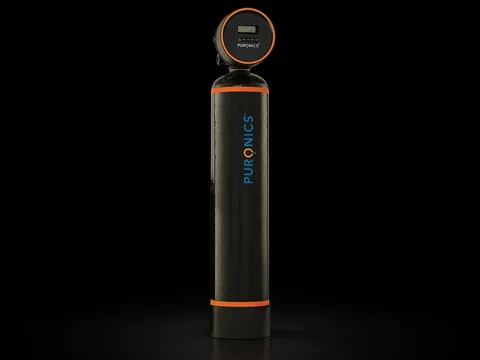 Puronics IronMax iGen 10PIron, manganese & sulfur · Special order
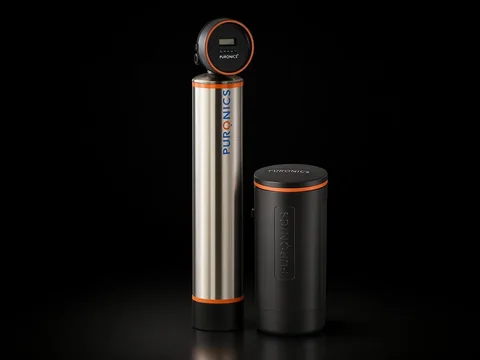 Puronics Hydronex iGen 30CSoftener + chlorine reduction · In stock
Problems it solves
Wondering about price? Well water treatment cost: what drives it. We show your exact price after your free analysis.
Compare your options
Where we install
Common questions
How often should I test my well?
The EPA recommends testing every year for total coliform bacteria, nitrates, total dissolved solids, and pH, and more often if something changes. Delaware recommends annual nitrate and bacteria tests.
Is your in-home test the same as a certified lab test?
No. Our in-home test is a fast screen for treatment design (things like hardness, iron, and pH). For health-related contaminants and real estate requirements, use a state-certified lab; we'll help you read the results.
Clean water starts with knowing what's in it.
Sources
- Penn State Extension: Private water systems FAQs. extension.psu.edu/private-water-systems-faqs
- PA DEP: Private wells. www.pa.gov/agencies/dep/residents/my-water/private-wells
- NJ Department of Health: PFAS and private wells in New Jersey (July 2025). www.nj.gov/health/ceohs/documents/pfas_well_water.pdf
- Delaware DPH: Financial aid program and free water testing kits for private well owners (Aug 31, 2023). news.delaware.gov/2023/08/31/dph-launches-new-financial-aid-program-for-private-well-owners-offers-free-water-testing-kits-to-delaware-residents/
- Chester County Health Department: Well water test labs. www.chesco.org/978/Well-Water-Test-Labs
- Penn State AASL: Chester County drinking water test summary. agsci.psu.edu/aasl/water-testing/drinking-water-testing/drinking-water-test-summaries/chester
- USGS: High levels of radon found in some wells across Pennsylvania. www.usgs.gov/news/state-news-release/high-levels-radon-found-some-wells-across-pennsylvania
- NJ DOH Environmental Public Health Tracking: Arsenic in private wells. www-doh.nj.gov/doh-shad/indicator/summary/EPHTPrivWellArsenic.html
- NJ DOH Environmental Public Health Tracking: Gross alpha in private wells. www-doh.nj.gov/doh-shad/indicator/summary/GrossAlphaPW.html
EPA records retrieved Oct 2026 from the EPA SDWIS and UCMR 5 public datasets. Utility records describe a water system, not the tap in your home. Records can lag and may be incomplete.