
Water problems
Acidic and corrosive water
Blue-green stains and pinhole leaks often mean corrosive water. In Chester County, 83% of Penn State well samples were outside the non-corrosive range. Here's what to do.
Water with a low pH, or that's low in minerals, can be corrosive. It dissolves copper and other metals from your plumbing, which causes blue-green stains on fixtures, a metallic taste, and eventually pinhole leaks. Corrosive water can also pick up lead from older solder and fixtures. The EPA's secondary guideline for pH is 6.5 to 8.5[1].
How common is it here?
In Penn State's Agricultural Analytical Services Lab summary of Chester County well water (2008–2025), 83.3% of samples tested for corrosivity (190 of 228) fell outside the non-corrosive range, and 29.2% had a pH outside 6.5–8.5[2].
Penn State Extension explains why corrosive water is common in Pennsylvania groundwater and what it does to plumbing[3]. Public water systems are required to control corrosion, so this is mostly a private well problem.
Signs
- Blue-green stains in sinks and tubs (copper)
- Metallic or bitter taste
- Pinhole leaks in copper pipe
- Shorter life for water heaters and fixtures
Fixing it
We don't currently install acid neutralizers, but we can test your water and explain what we find. Mildly acidic water is usually corrected with an acid neutralizer: a tank of calcite (and sometimes magnesium oxide) that dissolves into the water and raises the pH. It also adds some hardness, so a softener may follow. More acidic water is treated by feeding soda ash. The right system depends on your pH, alkalinity, and flow rate, so well treatment starts with a test. If you have older plumbing, ask about checking for lead and copper at the tap too.
Solutions that help
Systems we'd typically recommend
From the WÜDR range. The exact model, configuration and sizing follow your water analysis.
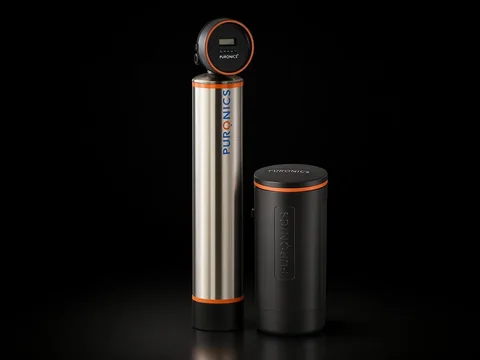
What drives the price? See Well water treatment cost. Every recommendation starts with your free water report.
Where this comes up in our service area
Common questions
Is acidic water safe to drink?
Low pH itself is mainly a corrosion problem, but corrosive water can dissolve copper and lead from plumbing. Test for pH, and for lead and copper at the tap if your water is corrosive.
Why are blue-green stains a sign of acidic water?
The stains are copper dissolved from your pipes. That usually means the water is corrosive.
Clean water starts with knowing what's in it.
Sources
- U.S. EPA: Secondary drinking water standards (nuisance chemicals). www.epa.gov/sdwa/secondary-drinking-water-standards-guidance-nuisance-chemicals
- Penn State AASL: Chester County drinking water test summary. agsci.psu.edu/aasl/water-testing/drinking-water-testing/drinking-water-test-summaries/chester
- Penn State Extension: Corrosive water problems. extension.psu.edu/corrosive-water-problems
EPA records retrieved Oct 2026 from the EPA SDWIS and UCMR 5 public datasets. Utility records describe a water system, not the tap in your home. Records can lag and may be incomplete.