
Water problems
Arsenic in well water
5.7% of NJ private wells tested exceeded 5 µg/L arsenic, highest in Bergen, Hunterdon, Mercer, and Somerset counties. How to test and which treatments work.
Arsenic is a naturally occurring element found in some bedrock. It has no color, smell, or taste, so a lab test is the only way to know. The federal limit for public water is 10 micrograms per liter (µg/L)[1], and New Jersey uses a stricter 5 µg/L benchmark[2].
Arsenic in New Jersey wells
Under the Private Well Testing Act, 5.7% of 89,206 New Jersey wells tested exceeded 5 µg/L arsenic. Rates were highest in Bergen, Hunterdon, Mercer, and Somerset counties[2].
Those figures come from tests required under the Private Well Testing Act, which applies when a home with a well is sold. Check with your lab which parameters apply in your county; see our PWTA guide. In Pennsylvania and Delaware, testing a private well is the owner's responsibility[3].
Treatment
Arsenic exists in two forms, arsenic III and arsenic V, and treatment depends on which you have. Arsenic V is easier to remove. Common options are:
- Point-of-use reverse osmosis for drinking and cooking water (works best on arsenic V; pre-oxidation helps with arsenic III)
- Whole-home adsorptive media (iron-based) for higher levels or when you want every tap treated
- Oxidation plus filtration, often combined with iron removal
NJDEP's private well treatment guidance compares whole-home and point-of-use approaches[4]. Retest after installation to confirm the system works.
Solutions that help
Systems we'd typically recommend
From the WÜDR range. The exact model, configuration and sizing follow your water analysis.
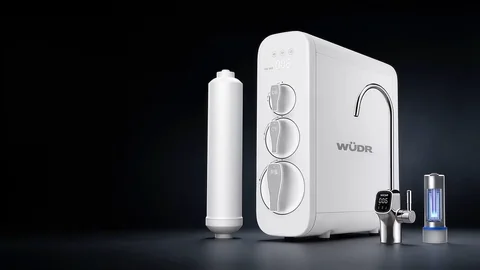
What drives the price? See Well water treatment cost. Every recommendation starts with your free water report.
Where this comes up in our service area
Common questions
Is arsenic in well water common in New Jersey?
About 5.7% of wells tested under the Private Well Testing Act exceeded 5 µg/L, with higher rates in Bergen, Hunterdon, Mercer, and Somerset counties.
Can I shower in water with arsenic?
Arsenic is mainly a concern when swallowed, which is why point-of-use reverse osmosis for drinking water is a common solution. Higher levels may call for whole-home treatment.
Clean water starts with knowing what's in it.
Sources
- U.S. EPA: National Primary Drinking Water Regulations. www.epa.gov/ground-water-and-drinking-water/national-primary-drinking-water-regulations
- NJ DOH Environmental Public Health Tracking: Arsenic in private wells. www-doh.nj.gov/doh-shad/indicator/summary/EPHTPrivWellArsenic.html
- PA DEP: Private wells. www.pa.gov/agencies/dep/residents/my-water/private-wells
- NJDEP: Private well treatment. dep.nj.gov/privatewells/treatment/
EPA records retrieved Oct 2026 from the EPA SDWIS and UCMR 5 public datasets. Utility records describe a water system, not the tap in your home. Records can lag and may be incomplete.