
Water problems
Nitrate in well water
Nitrate comes from fertilizer, manure, and septic systems. The EPA limit is 10 mg/L. Delaware recommends annual well testing and offers free kits. How to treat it.
Nitrate reaches groundwater from fertilizer, manure, and septic systems, so it's a concern for private wells in farm country and areas with many septic systems. You can't see, smell, or taste it. The EPA limit for nitrate is 10 mg/L (as nitrogen)[1]. Infants under six months are most at risk: high nitrate can reduce the blood's ability to carry oxygen ("blue baby syndrome")[2].
Delaware: test every year
Delaware's Division of Public Health recommends that private well owners test for nitrate and bacteria every year. It offers free testing kits and a financial aid program for well owners[3]. In Sussex County, groundwater contamination near Millsboro led to a settlement with poultry processor Mountaire[4].
Pennsylvania and New Jersey
Pennsylvania doesn't regulate private wells, so testing is up to the owner[5]. In Chester County, the county health department keeps a list of certified well-testing labs[6]. New Jersey's Private Well Testing Act requires a certified-lab test when a home with a well is sold, and every five years for landlords[7]; see our PWTA guide.
Treatment
Boiling makes nitrate worse, since it concentrates as water evaporates. Reverse osmosis at the kitchen sink is the common fix for drinking and cooking water. Whole-home nitrate removal uses a nitrate-selective anion-exchange system. Because nitrate levels change with the seasons and rainfall, retest after treatment.
Solutions that help
Systems we'd typically recommend
From the WÜDR range. The exact model, configuration and sizing follow your water analysis.
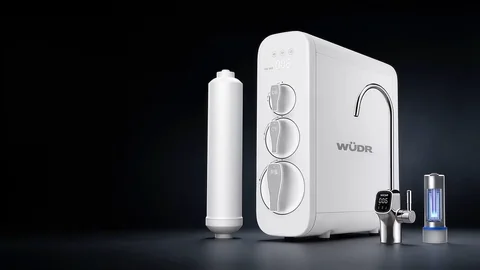
What drives the price? See Reverse osmosis cost. Every recommendation starts with your free water report.
Where this comes up in our service area
Common questions
Can I shower in water with high nitrate?
Nitrate is a concern when swallowed, not through skin, so drinking and cooking water are the priority. That's why kitchen-sink reverse osmosis is a common fix.
How often should I test my well for nitrate?
Delaware's Division of Public Health recommends testing every year, and more often if there's an infant or pregnant person in the home.
Clean water starts with knowing what's in it.
Sources
- U.S. EPA: National Primary Drinking Water Regulations. www.epa.gov/ground-water-and-drinking-water/national-primary-drinking-water-regulations
- U.S. EPA: Potential well water contaminants and their impacts. www.epa.gov/privatewells/potential-well-water-contaminants-and-their-impacts
- Delaware DPH: Financial aid program and free water testing kits for private well owners (Aug 31, 2023). news.delaware.gov/2023/08/31/dph-launches-new-financial-aid-program-for-private-well-owners-offers-free-water-testing-kits-to-delaware-residents/
- WHYY: Millsboro residents and the Mountaire settlement. whyy.org/articles/millsboro-mountaire-settlement-contaminated-water-delaware/
- PA DEP: Private wells. www.pa.gov/agencies/dep/residents/my-water/private-wells
- Chester County Health Department: Well water test labs. www.chesco.org/978/Well-Water-Test-Labs
- NJ Department of Health: PFAS and private wells in New Jersey (July 2025). www.nj.gov/health/ceohs/documents/pfas_well_water.pdf
EPA records retrieved Oct 2026 from the EPA SDWIS and UCMR 5 public datasets. Utility records describe a water system, not the tap in your home. Records can lag and may be incomplete.