
Solutions
Reverse osmosis drinking water
Under-sink reverse osmosis for drinking and cooking water: how it works, what it reduces (including PFAS, lead, nitrate, and arsenic), and how to choose a certified system.
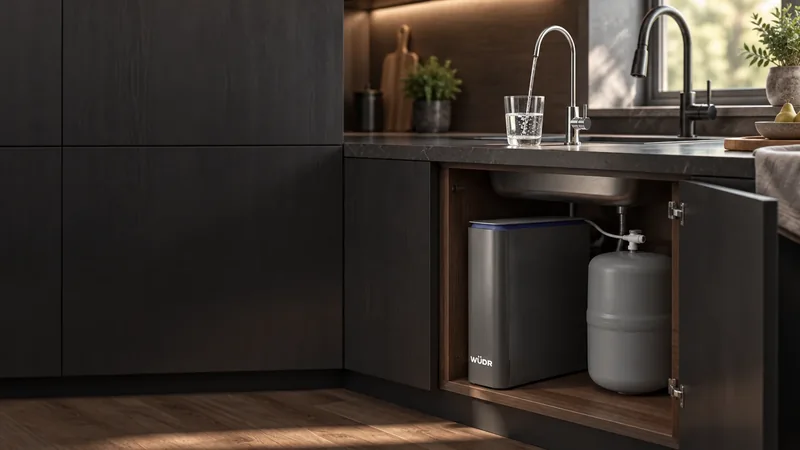
Reverse osmosis (RO) pushes water through a very fine membrane that holds back most dissolved substances. Most homes install it under the kitchen sink with its own faucet, for drinking, cooking, coffee, and ice. A typical system has a sediment pre-filter, carbon stages, the membrane, a storage tank or tankless pump, and a final polishing filter.
When RO is the right call
- PFAS: RO is one of the technologies that reduce PFAS; look for NSF/ANSI 58 certification for PFAS reduction[1]. See PFAS in drinking water.
- Nitrate and arsenic in well water, where drinking water is the priority[2]
- Lead from household plumbing, as a tap-level safeguard
- Taste: many people simply prefer it to bottled water
Good to know
RO sends some water to the drain as it works; newer designs waste much less than older ones. It works best on softened or low-iron water, which protects the membrane, so on hard water or a well we may pair it with a softener or well treatment. Filters and membranes are replaced on a schedule.
Certification
NSF/ANSI 58 is the standard for reverse osmosis systems. Each certified claim is listed separately (for example, PFOA/PFOS, lead, or nitrate), so check the claim for the contaminant in your water.
Systems we'd typically recommend
From the WÜDR range. The exact model, configuration and sizing follow your water analysis.
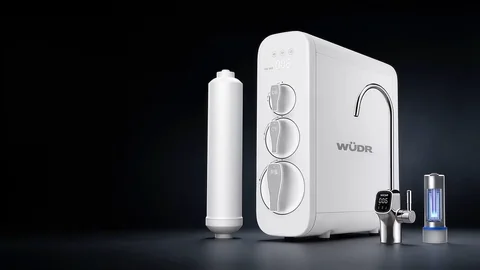 WÜDR Tankless RO 800Tankless RO · 800 GPD · Remineralization bundle
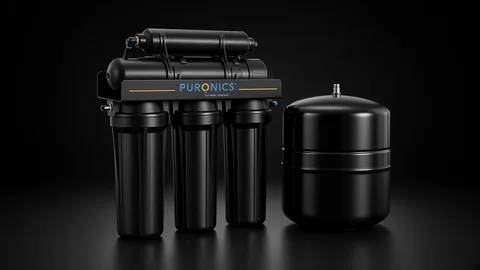 Puronics Pur-Alkaline PC6-38-B6-stage RO with tank
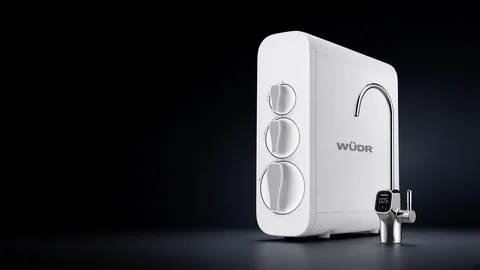 WÜDR Tankless RO 600Tankless RO · 600 GPD
Problems it solves
Wondering about price? Reverse osmosis cost: what drives it. We show your exact price after your free analysis.
Compare your options
Where we install
Common questions
Does RO remove healthy minerals?
Yes, RO removes most dissolved minerals along with contaminants. Most of the minerals in a typical diet come from food, and some systems add a remineralization stage for taste.
Do I need RO if my city water meets standards?
Not necessarily. It's most useful when your report shows PFAS, lead risk from older plumbing, or you're on a well with nitrate or arsenic. Your water report helps you decide.
Clean water starts with knowing what's in it.
Sources
- NJ Department of Health: PFAS and private wells in New Jersey (July 2025). www.nj.gov/health/ceohs/documents/pfas_well_water.pdf
- U.S. EPA: Potential well water contaminants and their impacts. www.epa.gov/privatewells/potential-well-water-contaminants-and-their-impacts
EPA records retrieved Oct 2026 from the EPA SDWIS and UCMR 5 public datasets. Utility records describe a water system, not the tap in your home. Records can lag and may be incomplete.