
Solutions
PFAS filtration for your home
Home PFAS filtration chosen from your utility's EPA PFAS results or a lab test: reverse osmosis at the kitchen sink, with PA, NJ & DE limits explained.
PFAS limits are tightening. EPA's 4.0 ppt limits for PFOA and PFOS apply to public water systems from 2029[1], Delaware's matching limits took effect in January 2026[2], and Pennsylvania's limits are 14 ppt (PFOA) and 18 ppt (PFOS)[3]. Many utilities in our area have reported PFOA or PFOS above 4.0 ppt in EPA sampling[4], and some will need to add treatment. Until then, you can treat your own water.
Our PFAS options
| WÜDR Tankless RO 800 | WÜDR Tankless RO 600 | |
|---|---|---|
| Type | Tankless RO, 10 stages, 800 GPD | Tankless RO, 8 stages, 600 GPD |
| PFAS | Reduces PFAS at the drinking tap; sized to your results | Reduces PFAS at the drinking tap; sized to your results |
NJDEP's guidance explains the point-of-entry versus point-of-use decision[5]. NSF/ANSI 53 and 58 certified drinking-water devices have been shown to reduce PFAS below 20 ppt[6].
Start with your numbers
On public water, our free report shows your utility's EPA PFAS results by compound. On a private well, PFAS needs a certified lab test; New Jersey well owners may qualify for help from the NJ Spill Fund[6]. Then we recommend the system and show the price.
Systems we'd typically recommend
From the WÜDR range. The exact model, configuration and sizing follow your water analysis.
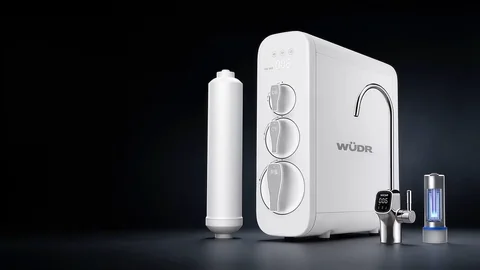 WÜDR Tankless RO 800Tankless RO · 800 GPD · Remineralization bundle
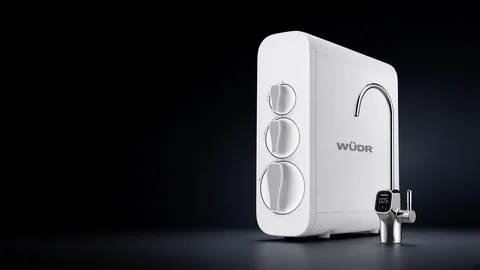 WÜDR Tankless RO 600Tankless RO · 600 GPD
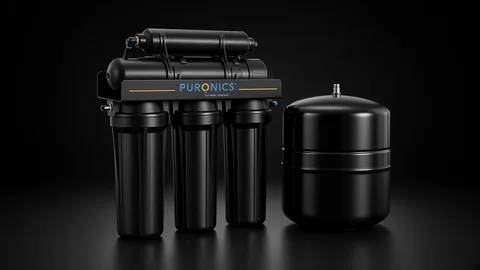 Puronics Pur-Alkaline PC6-38-B6-stage RO with tank
Problems it solves
Wondering about price? Reverse osmosis cost: what drives it. We show your exact price after your free analysis.
Compare your options
Where we install
Common questions
Which PFAS filter is best?
There isn't one best filter for every home. Reverse osmosis is very effective at the drinking tap; for PFAS we recommend the WÜDR Tankless RO 800, which pairs a 0.0001 μm RO membrane with 10 stages of filtration. The right choice depends on which PFAS are present and at what levels.
How often do PFAS filters need changing?
It depends on PFAS levels, other contaminants that compete for the media, and water use. We set the schedule from your numbers; for well water we recommend periodic retesting.
Clean water starts with knowing what's in it.
Sources
- U.S. EPA: Proposed PFOA and PFOS compliance extension rule. www.epa.gov/sdwa/proposed-pfoa-and-pfos-compliance-extension-rule
- Delaware Public Health: PFAS in Delaware public drinking water. publichealthalerts.delaware.gov/pfas-in-delaware-public-drinking-water/
- PA DEP: PFAS MCL rule. www.pa.gov/agencies/dep/programs-and-services/water/bureau-of-safe-drinking-water/drinking-water-management/drinking-water-regulations/pfas-mcl-rule
- U.S. EPA: UCMR occurrence data. www.epa.gov/dwucmr/occurrence-data-unregulated-contaminant-monitoring-rule
- NJDEP: Private well treatment. dep.nj.gov/privatewells/treatment/
- NJ Department of Health: PFAS and private wells in New Jersey (July 2025). www.nj.gov/health/ceohs/documents/pfas_well_water.pdf
EPA records retrieved Oct 2026 from the EPA SDWIS and UCMR 5 public datasets. Utility records describe a water system, not the tap in your home. Records can lag and may be incomplete.