
Compare
Tankless vs. tank reverse osmosis
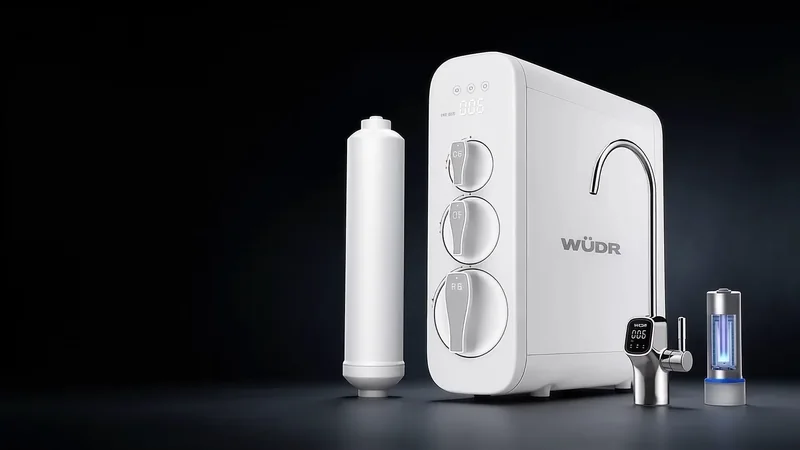
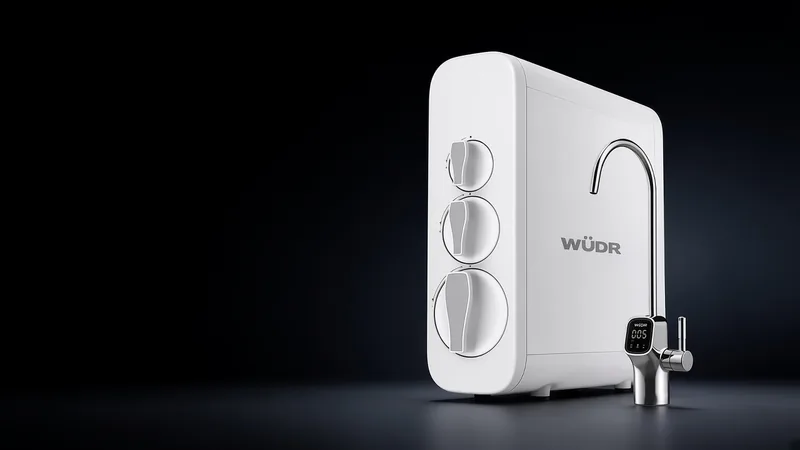
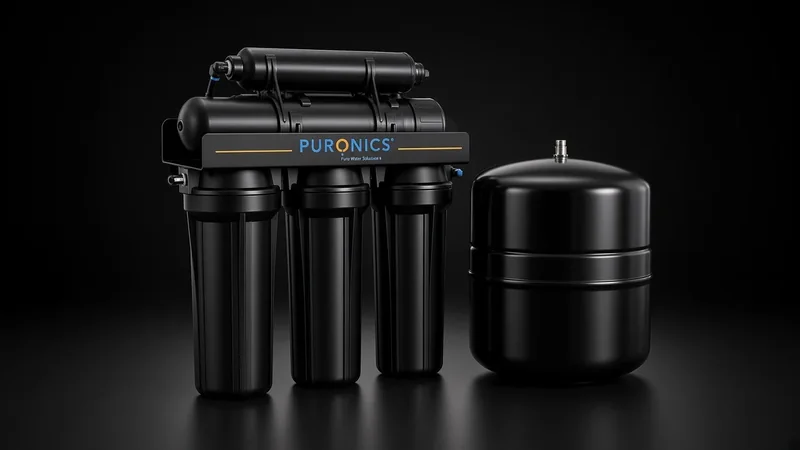
Tankless systems make water on demand and save cabinet space. Tank systems store treated water and can run without power.
| Feature | WÜDR Tankless RO 800 | WÜDR Tankless RO 600 | Puronics Pur-Alkaline |
|---|---|---|---|
| Format | Tankless | Tankless | Storage tank |
| Stages | 10 | 8 | 6 |
| Flow | 800 GPD | 600 GPD | From the storage tank |
| Power | Outlet required | Outlet required | None required |
| Faucet | Smart faucet | Smart display faucet (TDS, filter life) | Long-neck faucet |
| Final stage | Remineralization filter (bundle) | Not listed | Alkaline post-filter |
| Price | Confirmed in your quote | Confirmed in your quote | Quoted after a test or consultation |
WÜDR system specifications are WÜDR's; Puronics specifications are from Puronics brochures. Prices: confirmed in your quote.
How to decide
Tankless RO pushes water through the membrane when you open the faucet, so there is no tank to refill and the unit takes less space, but it needs an outlet. A tank system like the Pur-Alkaline fills a storage tank using household water pressure, so it needs no power. Either way, a water report or in-home test tells you what you need to reduce.
Common questions
Is tankless RO better?
Not always. It is faster and smaller, but needs power. A tank system works without electricity.
Do I need RO and a whole-house system?
Sometimes. RO treats drinking water at one faucet. Hardness, chlorine taste, iron or sulfur at every tap need a whole-house system such as the Hydronex or IronMax.