
Solutions
Water softeners sized to your hardness
Ion-exchange water softeners sized to your measured hardness, iron, and household water use, with installation across PA, NJ & DE. See your recommendation after a free analysis.
A water softener removes the calcium and magnesium that cause scale, spots, and soap scum. It works by ion exchange: water passes through resin beads that trade hardness minerals for sodium or potassium. When the resin is full, the softener regenerates with a brine rinse from the salt tank.
Sized to your water, not a guess
Softener capacity is measured in grains. To size one we need your hardness in grains per gallon (1 gpg = 17.1 mg/L)[1], any iron in the water (which uses up capacity), how many people live in the home, and the flow rate your plumbing needs. Hardness varies widely even within one region: Philadelphia's three plants averaged roughly 6, 9, and 10 gpg in 2024[2], and New Jersey American Water reports 5–13 gpg for its Raritan system[3]. An undersized unit regenerates too often and wastes salt; an oversized one costs more than it needs to.
What a softener doesn't do
A softener isn't a filter. It doesn't remove chlorine, chloramine, PFAS, or lead, and most homes that want those addressed pair it with whole-house treatment or reverse osmosis at the kitchen sink. Softened water does add some sodium; people on a sodium-restricted diet can use potassium chloride or drink RO water.
Certifications to look for
NSF/ANSI 44 is the standard for residential softeners. If a softener claims to reduce something beyond hardness, ask for the certified claim for that contaminant.
Systems we'd typically recommend
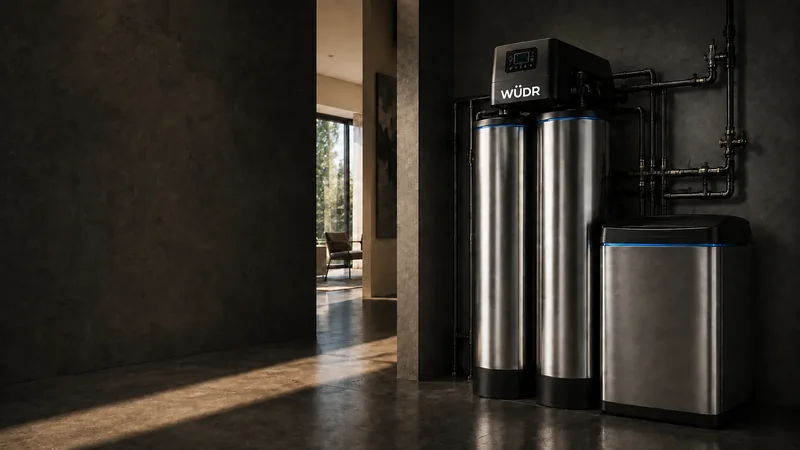
From the WÜDR range. The exact model, configuration and sizing follow your water analysis.
Problems it solves
Wondering about price? Water softener cost: what drives it. We show your exact price after your free analysis.
Compare your options
Where we install
Common questions
Salt-based or salt-free?
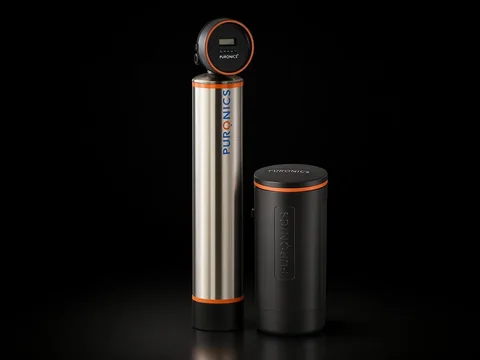
Salt-free conditioners don't remove hardness minerals, and we don't sell them. If you want soft water, an ion-exchange softener like the Puronics Hydronex iGen 30C is the proven method.
How much salt will I use?
It depends on your hardness, water use, and the softener's efficiency. A correctly sized, demand-based softener uses noticeably less than an undersized or timer-based one.
Can I drink softened water?
Yes for most people. It contains some added sodium; if that's a concern, use potassium chloride or add reverse osmosis at the kitchen sink.
Clean water starts with knowing what's in it.
Sources
- USGS Water Science School: Hardness of water. www.usgs.gov/special-topics/water-science-school/science/hardness-water
- Philadelphia Water Department: 2024 Water Quality Report (PDF). water.phila.gov/wp-content/uploads/files/2024-pwd-water-quality-report.pdf
- NJ American Water: Raritan/Hunterdon/Mercer/Somerset typical water quality (PDF). amwater.com/njaw/resources/raritanhunterdonmercersomerset_twq.pdf
EPA records retrieved Oct 2026 from the EPA SDWIS and UCMR 5 public datasets. Utility records describe a water system, not the tap in your home. Records can lag and may be incomplete.