
Water problems
Iron and manganese in water
Orange and black stains, metallic taste, and clogged fixtures: what iron and manganese do, the EPA's 0.3 and 0.05 mg/L guidelines, and how they're removed.
Iron and manganese dissolve out of rock and soil into groundwater, so they're most common in private wells and in utilities that pump groundwater. They're mostly a nuisance at typical levels: the EPA's secondary (non-enforceable) guidelines are 0.3 mg/L for iron and 0.05 mg/L for manganese, set for taste, staining, and appearance[1].
Signs
- Orange, red, or brown stains (iron) or black stains (manganese) in sinks, toilets, and laundry
- Metallic taste; tea and coffee look dark
- Water that runs clear, then turns cloudy or rusty after sitting
- Slimy orange buildup in toilet tanks (iron bacteria)
How it's treated
The right treatment depends on the form and amount. Dissolved ("clear water") iron at low levels can be handled by a water softener, although it uses up capacity. Higher levels, or iron that's already oxidized, need an oxidizing filter: air injection, chlorine, or another oxidant, then a filter bed that's backwashed. Manganese often needs a higher pH or a stronger oxidant than iron. Low pH and iron bacteria change the design, which is why well treatment starts with a full test.
Public systems report iron and manganese in their Consumer Confidence Reports[2]. Some utilities in our area have had manganese flagged in EPA records, so check your report if you see stains on public water.
Solutions that help
Systems we'd typically recommend
From the WÜDR range. The exact model, configuration and sizing follow your water analysis.
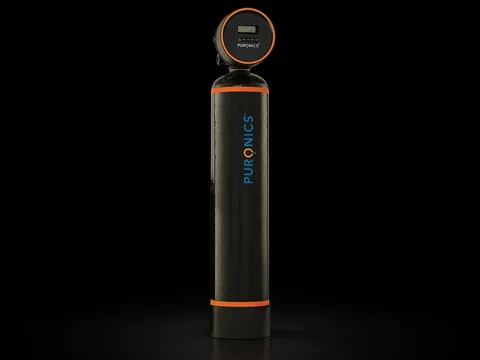 Puronics IronMax iGen 10PIron, manganese & sulfur · Special order
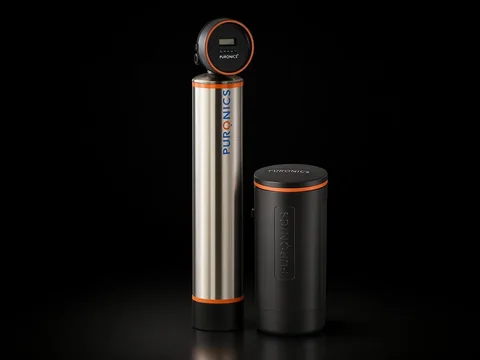 Puronics Hydronex iGen 30CSoftener + chlorine reduction · In stock
What drives the price? See Well water treatment cost. Every recommendation starts with your free water report.
Where this comes up in our service area
Common questions
Is iron in water dangerous?
At typical levels, iron is a nuisance rather than a health concern; the EPA guideline of 0.3 mg/L is about staining and taste. Manganese can be a health concern at higher levels, so test if you see black staining.
Can a softener remove iron?
A softener can remove small amounts of dissolved iron, but it reduces softening capacity and can foul the resin. Higher iron needs a dedicated iron filter ahead of the softener.
Clean water starts with knowing what's in it.
Sources
- U.S. EPA: Secondary drinking water standards (nuisance chemicals). www.epa.gov/sdwa/secondary-drinking-water-standards-guidance-nuisance-chemicals
- U.S. EPA: Consumer Confidence Reports (CCR) information for consumers. www.epa.gov/ccr/ccr-information-consumers
EPA records retrieved Oct 2026 from the EPA SDWIS and UCMR 5 public datasets. Utility records describe a water system, not the tap in your home. Records can lag and may be incomplete.