
Water problems
PFAS in drinking water in PA, NJ, and DE
PFAS 'forever chemicals' explained: the federal 4.0 ppt PFOA/PFOS limits, Pennsylvania, New Jersey, and Delaware rules, how to check your utility, and what removes PFAS.
PFAS (per- and polyfluoroalkyl substances) are a large family of man-made chemicals used since the 1940s for their heat- and stain-resistant properties. Many don't break down in the environment, which is why they're called "forever chemicals." Even low concentrations in drinking water can add up in the body over time[1].
The limits that apply to you
| Rule | What it says |
|---|---|
| Federal (EPA) | PFOA and PFOS limits of 4.0 parts per trillion (ppt). Water systems must comply by April 26, 2029. EPA has proposed an optional extension to 2031; it is not final[2][3]. |
| Pennsylvania (DEP) | PFOA 14 ppt and PFOS 18 ppt, effective January 14, 2023[4]. |
| Delaware | PFOA 4.0 ppt, PFOS 4.0 ppt, and 10 ppt each for PFHxS, PFNA, and GenX, plus a hazard index, effective January 15, 2026. Results are posted in Delaware Drinking Water Watch[5][6]. |
| New Jersey | First state to set a PFNA limit (2018), followed by PFOA and PFOS limits in 2020. Since December 1, 2021, PFNA, PFOA, and PFOS are required tests under the Private Well Testing Act[1]. |
What utilities near you have found
EPA's UCMR 5 program had utilities sample for 29 PFAS between 2023 and 2025[7]. In the records we pulled for our service area, many large systems reported PFOA or PFOS above 4.0 ppt. That isn't a violation today, since the federal limit applies from 2029, but it tells you where treatment is likely to change. Examples: Aqua Pennsylvania's Main System (PFOA up to 12.6 ppt), Artesian Water in northern Delaware (PFOA up to 23.1 ppt), and Georgetown, Delaware (PFOA up to 36 ppt)[8]. Enter your ZIP in our free water report to see your utility's results.
Private wells
Public data doesn't cover wells. In New Jersey, almost 16,000 wells were tested for PFOA, PFOS, and PFNA at real estate sale between December 2021 and 2023, and 11.2% had at least one above a state standard. The NJ Spill Fund may help eligible owners pay for treatment[1]. In Pennsylvania and Delaware, testing a well for PFAS is up to the owner.
What removes PFAS
Granular activated carbon, reverse osmosis, and ion-exchange resins can all reduce PFAS; at WÜDR we treat it at the kitchen sink with reverse osmosis. For a drinking water device, look for certification to NSF/ANSI 53 or 58 for PFAS reduction[1]. Whether you need a whole-home system or a kitchen-sink system depends on your levels and how you use water; NJDEP explains the point-of-entry versus point-of-use choice[9]. See PFAS filtration.
Solutions that help
Systems we'd typically recommend
From the WÜDR range. The exact model, configuration and sizing follow your water analysis.
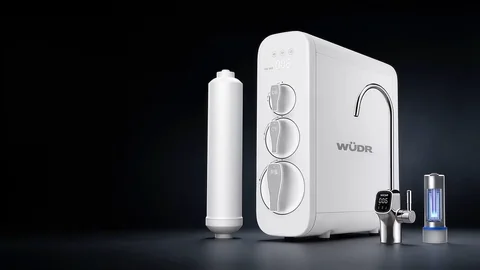 WÜDR Tankless RO 800Tankless RO · 800 GPD · Remineralization bundle
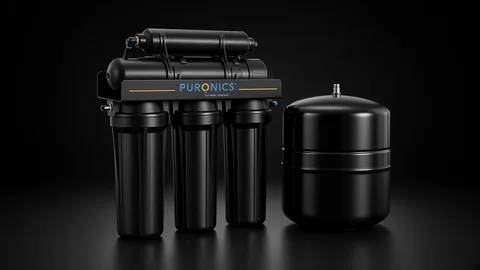 Puronics Pur-Alkaline PC6-38-B6-stage RO with tank
What drives the price? See Reverse osmosis cost. Every recommendation starts with your free water report.
State rules and local utility results: Pennsylvania, New Jersey, Delaware.
Where this comes up in our service area
Common questions
Is my water unsafe if PFOA is above 4 ppt?
The 4.0 ppt federal limit is based on long-term exposure, and systems have until 2029 to meet it. A result above 4 ppt is a reason to consider treatment and keep an eye on your utility, not a reason to panic. Your health care provider can answer personal health questions.
Does boiling water remove PFAS?
No. Boiling doesn't remove PFAS and can concentrate them slightly as water evaporates.
Will a refrigerator or pitcher filter remove PFAS?
Only if it's certified for PFAS reduction under NSF/ANSI 53 or 58. Check the product's listing for PFOA and PFOS specifically.
Clean water starts with knowing what's in it.
Sources
- NJ Department of Health: PFAS and private wells in New Jersey (July 2025). www.nj.gov/health/ceohs/documents/pfas_well_water.pdf
- U.S. EPA: Proposed PFOA and PFOS compliance extension rule. www.epa.gov/sdwa/proposed-pfoa-and-pfos-compliance-extension-rule
- Federal Register 2026-10086 (May 20, 2026). www.federalregister.gov/d/2026-10086
- PA DEP: PFAS MCL rule. www.pa.gov/agencies/dep/programs-and-services/water/bureau-of-safe-drinking-water/drinking-water-management/drinking-water-regulations/pfas-mcl-rule
- Delaware Public Health: PFAS in Delaware public drinking water. publichealthalerts.delaware.gov/pfas-in-delaware-public-drinking-water/
- Delaware Drinking Water Watch. drinkingwater.dhss.delaware.gov/
- U.S. EPA: Fifth Unregulated Contaminant Monitoring Rule (UCMR 5). www.epa.gov/dwucmr/fifth-unregulated-contaminant-monitoring-rule
- U.S. EPA: UCMR occurrence data. www.epa.gov/dwucmr/occurrence-data-unregulated-contaminant-monitoring-rule
- NJDEP: Private well treatment. dep.nj.gov/privatewells/treatment/
EPA records retrieved Oct 2026 from the EPA SDWIS and UCMR 5 public datasets. Utility records describe a water system, not the tap in your home. Records can lag and may be incomplete.